Exploring the Beauty and History of M42
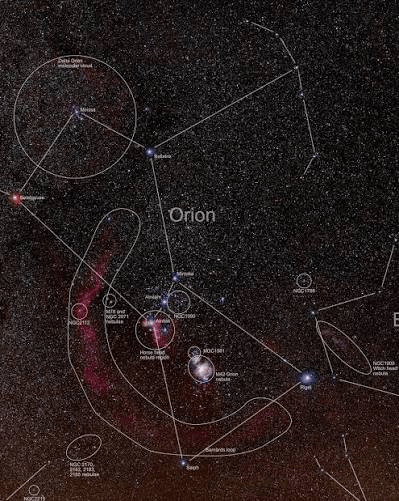
The Orion Nebula (M42) is one of the most recognizable and photographed objects in the night sky. Located in the constellation Orion, this massive stellar nursery has fascinated astronomers and astrophotographers for centuries thanks to its incredible structure, colors, and scientific importance.
The nebula is a huge cloud of gas and dust where new stars are being formed. At the heart of M42 lies the Trapezium Cluster, a group of young, bright stars that illuminate the surrounding gas and create the beautiful glowing regions we see in images.
The history of the Orion Nebula goes back hundreds of years. Although it was visible to the naked eye as a faint cloudy patch, detailed observations began after the invention of the telescope. Over time, astronomers discovered that it was not just a simple cloud, but an active region of star formation containing thousands of young stars and complex structures.
For astrophotographers, M42 is a perfect target because it contains a wide range of details. From the bright core around the Trapezium to the faint outer dust regions, the nebula offers both dramatic contrast and incredible depth. Capturing it often requires careful processing to preserve both the bright areas and the subtle surrounding structures.
Studying the Orion Nebula gives us a glimpse into the process of stellar birth and the evolution of our galaxy. It is not only one of the most beautiful objects in astrophotography but also one of the most important laboratories for understanding how stars and planetary systems are created.
What We Explore
🔹The History of the Orion Nebula
🔹The Birthplace of New Stars
🔹The Structure and Hidden Details of M42
🔹Why Orion Is a Favorite Astrophotography Target
🔹The Science Behind Its Beauty